Poza Press · Liberia Unchained Series

LIBERIA'S
NEGRO LAW

A Wound We Can Choose to Heal

A deep investigation into Article 27(b) of the Liberian Constitution — its origins, its human cost, and why Liberia must finally look, think, and decide.

"This book is not an attack on Liberia. It is a love letter to a country that deserves better than a constitution that contradicts its own founding promise."
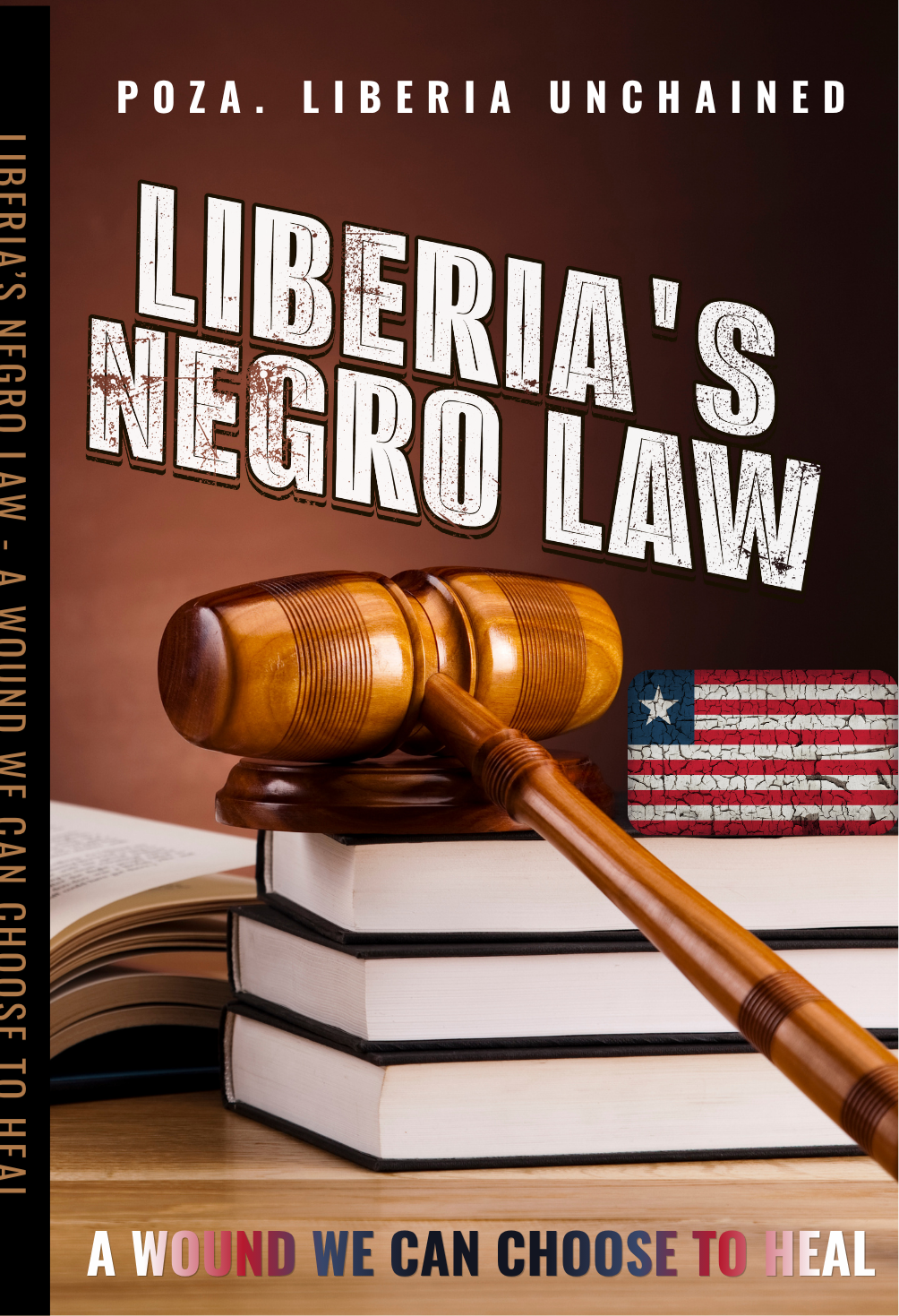
First Edition Published by The Poza Press Liberia Unchained Series
Liberia's Negro Law — A Wound We Can Choose to Heal, by Poza. Liberia Unchained
NEW · CIVIC RESEARCH TOOL

Constitution Explorer

Search key articles from Liberia's Constitution, read the text, and ask the Liberian Constitutional Scholar for a plain-English explanation rooted in law, history, reform, and national healing.

Chapter IV · Article 27(b)

Citizenship

Only persons who are Negroes or of Negro descent shall qualify by birth or by naturalization to be citizens of Liberia.
The Explorer search works instantly. The AI explanation requires Cloudflare Function setup.

Liberia27b.com is a civic education platform. It is not a court, law firm, government agency, or substitute for legal advice.

THE QUESTION AT THE HEART OF IT ALL

How did a people who fled exclusion end up building exclusion into their own freedom?

This page exists for readers who have finished the book, disagreed with it, wrestled with it, or felt challenged by it. The goal is not noise. The goal is national introspection.

01
Look
See the law clearly. Strip away the justifications, the historical comfort, and the silence. Look at what the constitution actually says — and who it names.
02
Think
Wrestle with the history honestly. A republic born from chains did not automatically become free. Trace the line from liberation theology to legalized exclusion.
03
Decide
Leave your reflection for the conversation. Liberia still has the power to choose. That choice begins with people willing to name what they see.

Thirty-Six Words That Decide Who Belongs

For decades, these thirty-six words have determined who can become Liberian by birth or by choice. They were written with intention. They endure with consequence. This book examines every word — not as a foreign attack, but as a Liberian reckoning.

"In order to preserve, foster and maintain the positive Liberian culture, values and character, only persons who are Negroes or of Negro descent shall qualify by birth or by naturalization to be citizens of Liberia."

Article 27(b) · Constitution of Liberia · 1986

This book examines every word — not as a foreign attack, but as a Liberian reckoning.

Inside the Book

Ten Chapters. One Honest Reckoning.

Each chapter opens a different wound — and asks whether Liberia is finally ready to let it heal.

Chapter 01
A Republic Born From Chains
The founding of Liberia is a story of liberation — and of a new hierarchy quietly taking shape.
Chapter 02
The Negro Law
The text of Article 27(b), examined word by word, clause by clause, consequence by consequence.
Chapter 03
Protection or Prejudice?
Was this law designed to protect a people — or to exclude one? The answer is more complicated than either side admits.
Chapter 04
The People Who Can Never Belong
Real stories of people born in Liberia, raised in Liberia, who cannot legally claim Liberia as their own.
Chapter 05
Land, Power, and the Locked Door
When citizenship determines land ownership, exclusion is not symbolic — it is economic violence.
Chapter 06
The Mirror We Avoid
Why Liberia has not yet confronted its own contradictions — and what that silence costs the nation.
Chapter 07
Racialized Citizenship and Black Colonialism
A global lens: how Black-majority nations replicate colonial logic inside their own constitutions.
Chapter 08
The World Has Moved On
How international law, human rights frameworks, and neighboring nations have evolved — while Article 27(b) has not.
Chapter 09
Voices for Change
Liberians, diaspora members, and reformers who believe a different Liberia is possible — and are working toward it.
Chapter 10
The Reform Liberia Deserves
A clear-eyed call for constitutional reform — not as a foreign demand, but as a Liberian act of self-determination.
The Human Cost

A Law Without Faces Is Easy to Defend.
A Law With Faces Is Harder.

These are not invented characters. They are composites of real people living inside the contradiction of Liberia's citizenship law.

S
Sammy
Born in Liberia, but not claimed by Liberia.
J
Father Joseph
Served Liberia for decades, still legally a guest.
A
Sister Ann
Delivered generations of Liberian children, yet cannot belong.
L
Lee
Built a family and business in Liberia, but remains outside the law.
?
The Stateless Child
Born on Liberian soil with no country to claim them.
Section 07

The Reflection Room

After reading the book, this is where the conversation continues. Leave your review, rating, disagreement, testimony, question, or personal reflection. The goal is not consensus — it is honest national dialogue.

What part of the book challenged you most?
Do you believe Article 27(b) should be amended?
What does belonging mean in Liberia today?
What did the book make you rethink?
What would you say to lawmakers?
"
Your voice belongs in this conversation.
Leave Your Mark

Leave Your Reflection

Your response may help shape the public conversation around Liberia, citizenship, belonging, and constitutional reform.

No ratings yet
5
0
4
0
3
0
2
0
1
0

Leave Your Reflection

Your response may help shape the public conversation around Liberia, citizenship, belonging, and constitutional reform.

Fields marked * are required.
Your submission is handled securely via Formspree.

Thank you.

Your reflection has been received.
The conversation continues.

The Choice Is Still There

Read It. Wrestle With It. Respond.

This book asks Liberia to do what every serious nation must eventually do: look honestly at the laws it inherited, the wounds it keeps, and the future it still has the power to choose.